
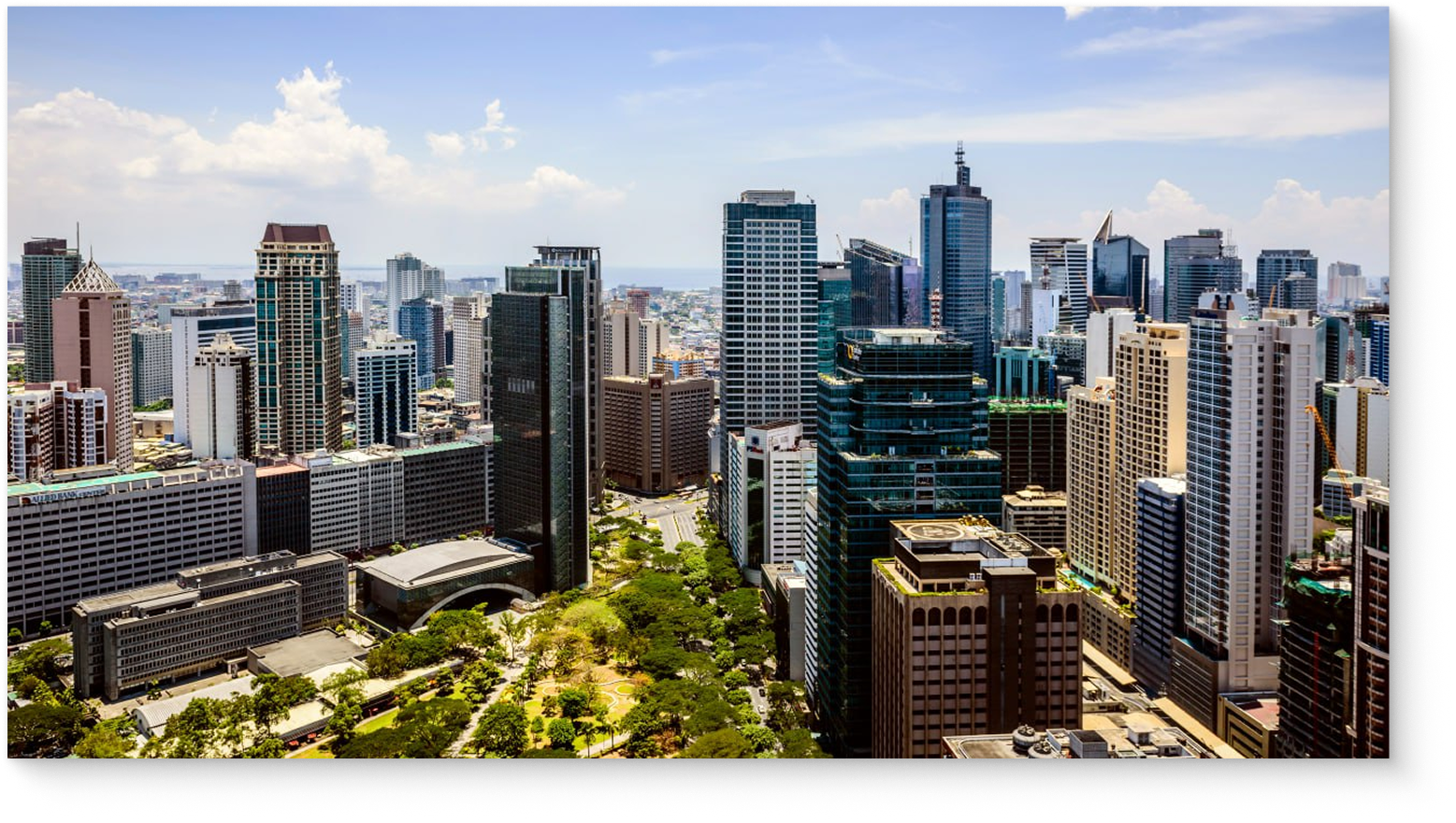
Why Real Estate in the Philippines Remains a Top Global Investment in 2026
Last Updated: December 19, 2025
For international buyers and global capital on the hunt for yield, the Philippines continues to shine as an attractive real estate frontier in 2026. With strong fundamentals, evolving regulation, infrastructure expansion, and growing interest from overseas investors, the archipelago offers more than scenic islands and tropical appeal. The challenge is navigating a complex, fragmented market — and that is where modern platforms like Grid step in to make cross-border investment far easier.
In this article, let us explore why real estate investment in the Philippines remains compelling in 2026, what risks to watch, and how using a platform like Grid boosts your chances of success.
The Case for Philippine Real Estate in 2026
1. Yield potential that competes globally
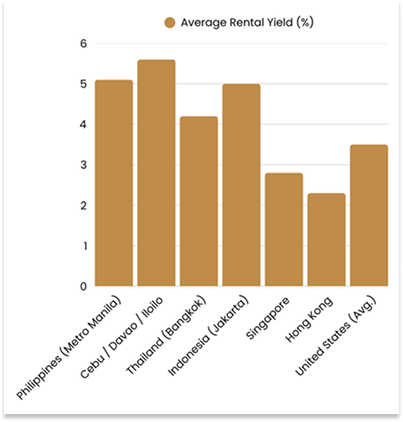
Despite volatility in global markets, Philippine residential properties continue to deliver respectable rental yields. As of Q1 2026, average yields hover around 5.12 % — a slight dip from late 2024, but still solid compared to many mature markets.
In addition, residential markets in key provincial cities are heating up. According to Colliers, areas such as Cebu, Iloilo, Bacolod, Davao, Pampanga, Bulacan, Cavite, and Laguna are seeing strong “take-up” (absorption) rates outside Metro Manila.
For luxury and prime segments, the upward trajectory has been especially steep. Manila, for example, saw luxury residential price growth that outpaced many global peers.
2. Evolving rules improving clarity for foreign investors

One persistent deterrent to foreign investment has been restrictions on land ownership. In 2026, the Philippines passed a law extending permitted lease durations for foreign investors from 75 years (50 + 25 extension) to up to 99 years for private land. This gives greater predictability and longer-term security for foreign capital allocation in commercial, industrial, and large scale developments. It is not full ownership, but the longer lease term aligns more closely with what many global investors expect.
3. Infrastructure, connectivity, and decentralization

A major driver of property appreciation in the Philippines is the continued push for infrastructure development and decentralization. New expressways, rail expansions, airport upgrades, and inter-island links are making previously remote areas far more accessible.
That means cities beyond Metro Manila are rising in relevance. Regional hubs like Iloilo, Bacolod, Davao, and parts of Luzon around Clark are being viewed as rising stars.
In 2026, supply in Metro Manila is also being moderated. JLL notes that development delays have eased near-term supply pressure, which in turn helps reduce vacancy and supports pricing.
4. Resilience in uncertain times

Global markets face headwinds: inflation, rising interest rates, geopolitical threats, and slower growth in mature economies. In that climate, real estate can offer a stable anchor. The Philippine real estate sector is adapting by emphasizing future-proofing assets, adopting sustainability, and integrating technology into property operations.
Developers are increasingly building “smart” properties, energy efficient systems, green design, and amenity-rich environments to boost appeal and durability.
In short: you are not just buying a ground plot or condo unit. You are investing into a growing economy, improving infrastructure, and rising global interest.
What International Buyers Should Watch
Of course no investment is without risk. Here are key considerations for a foreign investor in Philippine real estate in 2026:
Legal complexity and ownership limits. Land ownership by foreigners is still prohibited under the Constitution, so you must rely on long-term leases or corporate/structure arrangements. The 99-year lease reform helps but does not completely eliminate structural limitations.
Currency and financing risk. Real estate returns may look strong in local pesos, but currency fluctuations and differential interest rates matter.
Oversupply and vacancy in certain sectors. Retail, office, and commercial sectors must navigate oversupply in some areas or shifting demand under hybrid work.
Regulatory and policy shifts. Zoning changes, permitting, tax rules, and foreign investment policy can shift
Execution risk on infrastructure and delivery. Promised roads, connectivity, bridges, and amenities may lag timelines.
Introducing Grid.com.ph: A Platform Built for CrossBorder Real Estate Investment
This is where Grid comes in as a differentiator. Rather than navigating dozens of unconnected listings, brokers, and unverified claims, international buyers can leverage a platform designed for clarity, discovery, and cross border ease.

Here are some features and strengths of Grid and how they address investor needs:
Data Analytics and Business Intelligence Integration
Grid is a comprehensive BI platform powered by in-depth data analytics from public and private sources.
This means listings are not just photos and price tags. You get analytical insights, comparable pricing, trends, and performance data. For an overseas investor, that level of insight ahead of a site visit can save time and reduce risk.
Private Listings, Data Matching, and Curation
Grid offers private listings and data matching to help match property seekers with relevant opportunities. (GRID Property Ventures: Built on faith for the people).
AI-Driven Tools and Analytics
Grid’s AI tools help users simulate, forecast, or explore property performance. For example, perhaps you can run scenario analysis on rent growth or occupancy. That is a competitive edge for decision making from afar.
Unified Platform and Professional Network
Grid positions itself as more than a listings site. It is a PropTech hub that streamlines the acquisition workflow.
Through Grid you can upload property listings, interact with agents, access private deals, and manage communications in one place. That reduces friction especially for global users who are unfamiliar with local agents, intermediaries, or multiple platforms.
Trust, Validation, and Branding
Grid is building a reputation in the Philippines as a credible brand. Local media refer to it as “pioneering commercial real estate listing platform” and note its emphasis on data matching and private listings. (GRID Property Ventures: Built on faith for the people).
For a foreign buyer, using a trusted intermediary platform adds confidence, instead of relying on isolated agents or word of mouth.
How Grid Helps You Capitalize on Key 2026 Trends
Let us map how Grid’s features help you tap into the major real estate trends in 2026:
Regional growth beyond Metro Manila. As provincial centers gain momentum (Cebu, Davao, Iloilo, Bacolod), a platform like Grid can surface opportunities you might not find through mainstream central listings.
Sustainability and smart features. Because developers are emphasizing eco design and smart home integration, a platform that surfaces those features and filters by them helps you pick the projects most future ready. (Grid’s analytics can help here.)
Thematic or niche investing. Suppose you are interested in logistics, industrial, hotel, or mixed use. Grid’s data matching can surface projects in those themes rather than just residential.
Securing long-term leases. With the shift to 99-year leases, Grid can help you identify projects structured to take advantage of the new policy and highlight that to investors.
Mitigating risk through data. Because Grid offers analytics, you can compare metrics (rental yields, price growth, historical trends) before committing, especially from abroad.
In short: Grid is not just a listing aggregator. It is a bridge between global capital and Philippine real estate, packaging transparency, insight, curation, and workflows into one platform.
Sample Investment Strategy: How an International Buyer Might Use Grid
Here is a hypothetical roadmap of how you as an international buyer might use Grid to invest in Philippine real estate in 2026:
1. Create a profile and define your criteria. You log into Grid (or sign up) and set filters: region (e.g. Luzon, Visayas, Mindanao), property type (residential, commercial, logistics), budget, yield target, lease term preference.
2. Receive matched deals. Using Grid’s data matching, private listing features, and analytics, you receive a curated shortlist from vetted developers or sellers.
3. Run scenario analytics. Use AI or forecasting modules in Grid to simulate returns over 5, 10, or 20 years based on rental growth, demand projections, vacancy risk, and infrastructure timelines.
4. Connect with trusted local partners. Within the platform, connect with Grid partners (agents, developers, legal counsel) who can guide local due diligence, compliance, permitting, construction oversight.
5. Negotiate and lock terms. Use Grid’s unified communications to negotiate lease terms, deposit, escrow, and ensure transparency in contract drafting.
6. Monitor performance. Once the property is live, track leasing, occupancy, revenue performance (especially for commercial or hotel projects) through dashboards provided by Grid.
This model reduces friction, assumption risk, and fragmented sourcing; all major obstacles when investing abroad.
Why Real Estate Investment in the Philippines Should Be High on Your 2026 Radar
To recap, here is why global capital should continue to pay attention to Philippine real estate in 2026:
• Competitive yields amid global uncertainty
• Improved lease structure (99 years)
• Strong infrastructure and regional expansion trends
• Resilience and adaptability in property design
• Growing interest from foreign buyers shifting to emerging markets
But navigating this landscape demands more than passion. It requires data, access, and local intelligence; which is precisely the gap Grid aims to fill.
If you are an investor outside the Philippines exploring real estate opportunities in the tropics, think of Grid as your partner rather than a mere listing site. Its Business Intelligence analytics, curated private listings, AI modules, and unified workflows make it a compelling portal for cross-border investment.
In 2026, Philippine real estate is not just about islands and sunsets; it is about yield, infrastructure, smart development, and cross-border capital flows. Use the right tools, align with credible partners, and let your investments navigate global risk while capturing local growth.