
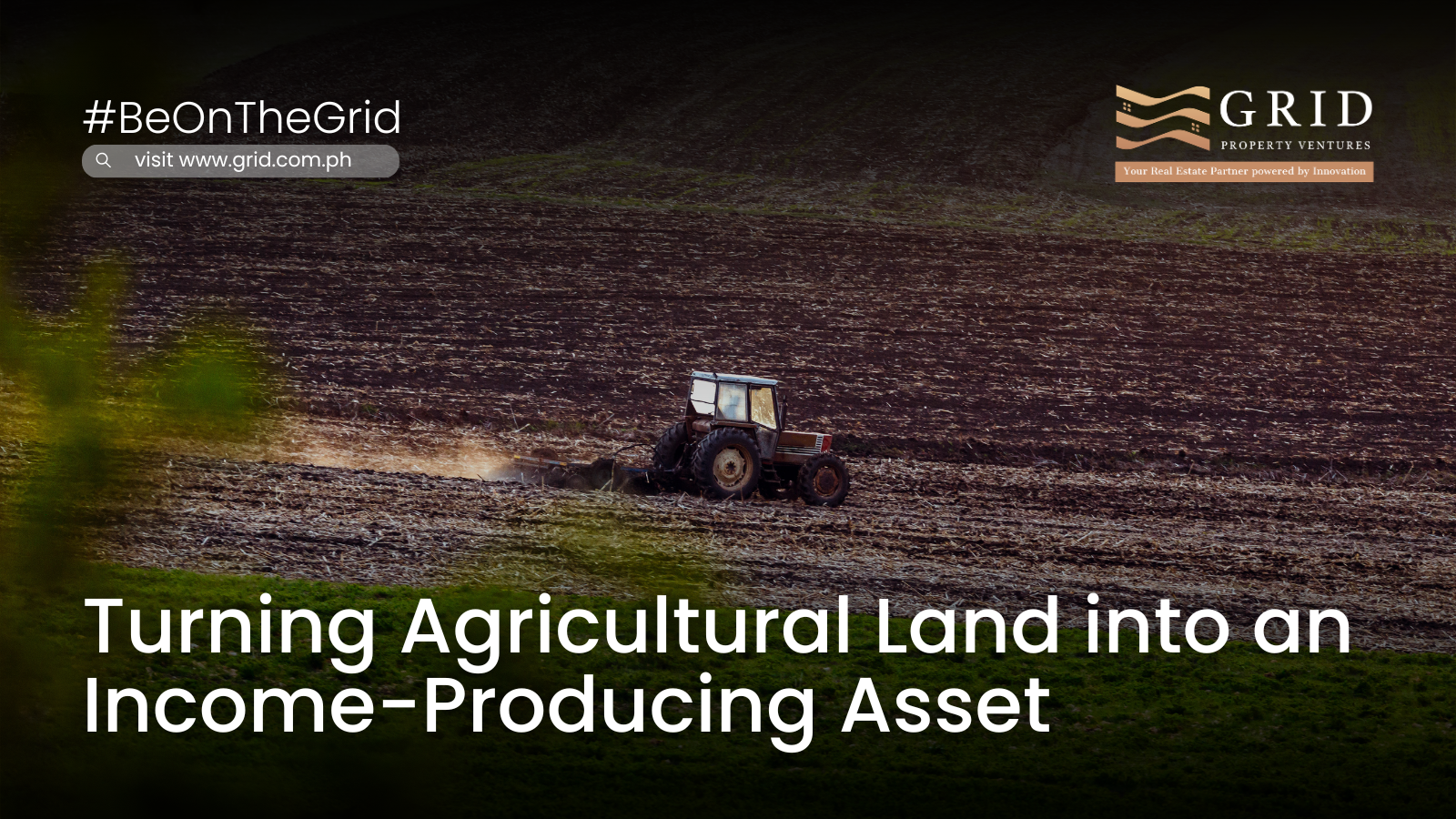
Turning Agricultural Land into an Income-Producing Asset
Last Updated: April 22, 2026
Get on the grid - it starts with a demo.
A lot of agricultural land in the Philippines is underutilized.
It sits idle, generates little to no income, and is often held purely for long-term appreciation. For many landowners, the plan is simple. Hold the land and wait for its value to increase over time.
But in today’s market, that approach leaves money on the table.
Agricultural land does not have to be passive. With the right strategy, it can become an income-producing asset while still preserving its long-term upside.
The key is understanding how to unlock its potential.
Why Agricultural Land Is Being Reconsidered
There are two major shifts happening right now.
First, investors are becoming more focused on cash flow. Holding land for appreciation alone is less attractive when there are opportunities to generate income from the same asset.
Second, demand for land use is evolving.
Agriculture is no longer limited to traditional farming. There is growing interest in agri-business, eco-tourism, logistics, and even renewable energy. These alternative uses are creating new ways to monetize land that would otherwise remain idle.
For landowners, this opens up options that did not exist before.
Leasing for Agricultural Use
The most straightforward way to generate income is leasing the land for agricultural purposes.
Farmers, cooperatives, and agri-business operators are often looking for land they can use without the upfront cost of purchasing. This creates a steady demand for lease agreements.
The advantage here is simplicity.
You retain ownership of the land while generating recurring income. Lease terms can vary depending on the type of use, from seasonal farming agreements to longer-term contracts.
However, the income potential depends on:
- Location and proximity to markets
- Soil quality and land condition
- Water access and irrigation availability
- Overall suitability for specific crops
Not all agricultural land will command the same lease rates, but even modest income is better than leaving the property idle.
Agri-Business Partnerships
For landowners who want higher returns, partnerships can be a more powerful option.
Instead of simply leasing the land, you collaborate with operators who develop and run agricultural or agri-related businesses on your property.
This could include:
- Commercial farming operations
- Greenhouses or controlled-environment agriculture
- Livestock or aquaculture projects
- Specialty crops with higher margins
In this setup, income can come from profit-sharing arrangements rather than fixed rent.
The upside is greater, but so is the complexity. Partnerships require:
- Clear agreements with defined roles and expectations
- Transparent profit-sharing structures
- A reliable and experienced operator
- Ongoing communication and oversight
When done correctly, this approach can significantly increase the earning potential of your land.
Exploring Eco-Tourism and Recreational Use
Another growing trend is the use of agricultural land for eco-tourism or recreational purposes.
Farm stays, camping sites, and nature-based experiences are gaining popularity, especially as more people look for alternatives to traditional travel.
Land that may not be ideal for intensive farming can still generate income through these types of activities.
Key factors that influence success include:
- Scenic value or natural features
- Accessibility from urban centers
- Safety and basic infrastructure
- Market demand for tourism in the area
This approach requires more development and planning, but it can transform underutilized land into a unique and profitable asset.
Renewable Energy Opportunities
One of the most overlooked opportunities for agricultural land is renewable energy.
Solar projects, in particular, require large parcels of land and are increasingly being explored across the country.
Energy developers often look for land that meets specific criteria, such as:
- Large contiguous land area
- Flat or gently sloping terrain
- Proximity to transmission lines
- Accessibility for construction and maintenance
These projects typically involve long-term lease agreements, providing:
- Stable and predictable income
- Minimal day-to-day management
- Long-term utilization of otherwise idle land
Not every property will qualify, but for those that do, this can be one of the most consistent income streams available.
The Importance of Zoning and Land Classification
Before pursuing any income-generating strategy, it is important to understand the legal framework.
Agricultural land in the Philippines is subject to zoning regulations and land classification rules. Certain uses may require conversion or special approvals.
Common considerations include:
- Current land classification and restrictions
- Required permits for alternative land use
- Local government zoning regulations
- Compliance with national land use policies
Moving too quickly without proper due diligence can lead to delays, penalties, or failed projects.
Infrastructure and Access Matter More Than You Think
Even for agricultural land, accessibility plays a huge role in income potential.
Properties with good road access, proximity to markets, and reliable utilities are far more attractive to tenants and partners.
If your land is difficult to access or lacks basic infrastructure, challenges may include:
- Higher development costs
- Limited tenant or partner interest
- Lower potential income rates
- Longer timelines to activate the property
This does not eliminate potential, but it does affect how quickly and effectively you can generate income.
Balancing Income and Long-Term Value
One concern landowners often have is whether generating income today will affect future property value.
The answer depends on how the land is used.
Well-structured agreements and appropriate land use can actually enhance value. Active use signals demand and can make the property more attractive to future buyers.
To balance both, focus on:
- Flexible agreements that allow future sale options
- Land use that aligns with long-term development potential
- Avoiding restrictive contracts that limit repositioning
- Maintaining the overall condition and usability of the land
The goal is to generate income without compromising your ability to capitalize on future opportunities.
Common Mistakes to Avoid
Turning agricultural land into an income-producing asset is not just about finding any opportunity.
Some of the most common mistakes include:
- Entering agreements without clear legal protection
- Choosing partners without proper due diligence
- Ignoring zoning and land use regulations
- Underestimating infrastructure and access requirements
- Focusing only on short-term income without long-term planning
Avoiding these can significantly improve your results.
Start With the Right Strategy
Every property is different.
What works for one piece of land may not work for another. The right approach depends on location, size, accessibility, and surrounding development.
The first step is understanding:
- What your land is best suited for
- Who the ideal users or partners are
- What level of involvement you are willing to take on
- How the strategy aligns with your financial goals
Once you have that clarity, execution becomes much easier.
Turn Idle Land Into Active Income
Agricultural land does not have to sit and wait for value to increase.
With the right approach, it can generate income today while still benefiting from long-term appreciation.
At GRID, we help landowners evaluate the true potential of their properties and connect them with opportunities that turn underutilized land into income-producing assets.
If you want to explore how your land can start working for you, we can help you map out the next steps.
Reach out today and turn your property into something that produces, not just appreciates.